The platform
Auditable product footprints
across your full catalogue
Root structures your existing data, fills the gaps, and
automatically calculates a footprint for all your products.
automatically calculates a footprint for all your products.

ISO 14040, 14044
methodology
methodology

CSRD & VSME
aligned
aligned

Every source
traceable
traceable

Audit-ready
from day one
from day one
The problem
Your sustainability
numbers take months
to build and are still
unreliable
numbers take months
to build and are still
unreliable
You can't trace your own numbers
You cannot trace where your figures come from. Auditors, customers, and leadership ask questions you cannot answer.
You collect the same data for every tool
Your CSRD tool, your footprinting tool, and your Scope 3 tool all need the same data. Yet, you have to collect the same data again for each tool.
One footprint takes days. You sell thousands
Every product footprint requires days of manual calculation. Doing it at scale is simply not realistic.
How it works
From fragmented operational data
to ready-to-use sustainability data
to ready-to-use sustainability data
Root is built around how retail supply chains actually work.
01
04
Root connects your
supply chain instantly
supply chain instantly
Upload your purchase and sales orders in any format.
Excel, CSV, or exports from your system. Root builds your
full supply chain structure automatically.
It connects bills of materials, transport, facility, usage,
and end of life data to the right product, supplier, and
route.
Excel, CSV, or exports from your system. Root builds your
full supply chain structure automatically.
It connects bills of materials, transport, facility, usage,
and end of life data to the right product, supplier, and
route.
02
04
Root flags gaps and
matches inputs to
emission factors
matches inputs to
emission factors
Root checks your data for gaps, flags what is incomplete,
and proposes traceable estimates.
Then for each material, transport mode, and energy
source, AI suggests the closest verified emission factor
from databases including Ecoinvent, Agribalyse and
Agri-footprint.
Every proposed emission factor shows its source before
you confirm it.
and proposes traceable estimates.
Then for each material, transport mode, and energy
source, AI suggests the closest verified emission factor
from databases including Ecoinvent, Agribalyse and
Agri-footprint.
Every proposed emission factor shows its source before
you confirm it.
03
04
Root calculates impact
across your full catalogue
across your full catalogue
Root generates a complete product footprint in under a
minute.
It breaks it down by product, material, facility, and
transport. Calculations cover Scope 1, Scope 2, and all 15
Scope 3 categories. They follow ISO 14040 and 14044
standards and IPCC 2021 and ReCiPe 2016 methodology.
Every assumption is documented. Every source is
traceable.
minute.
It breaks it down by product, material, facility, and
transport. Calculations cover Scope 1, Scope 2, and all 15
Scope 3 categories. They follow ISO 14040 and 14044
standards and IPCC 2021 and ReCiPe 2016 methodology.
Every assumption is documented. Every source is
traceable.
04
04
One dataset powers
every footprint, report,
and sustainability claim
every footprint, report,
and sustainability claim
Root draws on the same dataset to generate product
footprints, GHG reports, CSRD submissions, and
company dashboards.
The Scenario Builder lets you test changes to materials,
energy, or transport. You can see the projected impact at
both product and company level. It shows which actions
give you the most reduction per euro spent.
footprints, GHG reports, CSRD submissions, and
company dashboards.
The Scenario Builder lets you test changes to materials,
energy, or transport. You can see the projected impact at
both product and company level. It shows which actions
give you the most reduction per euro spent.


Capabilities
Built for the reality of
sustainability work
sustainability work
01
02
03
04
Collect supplier data
without the emails chain
instantly
without the emails chain
instantly
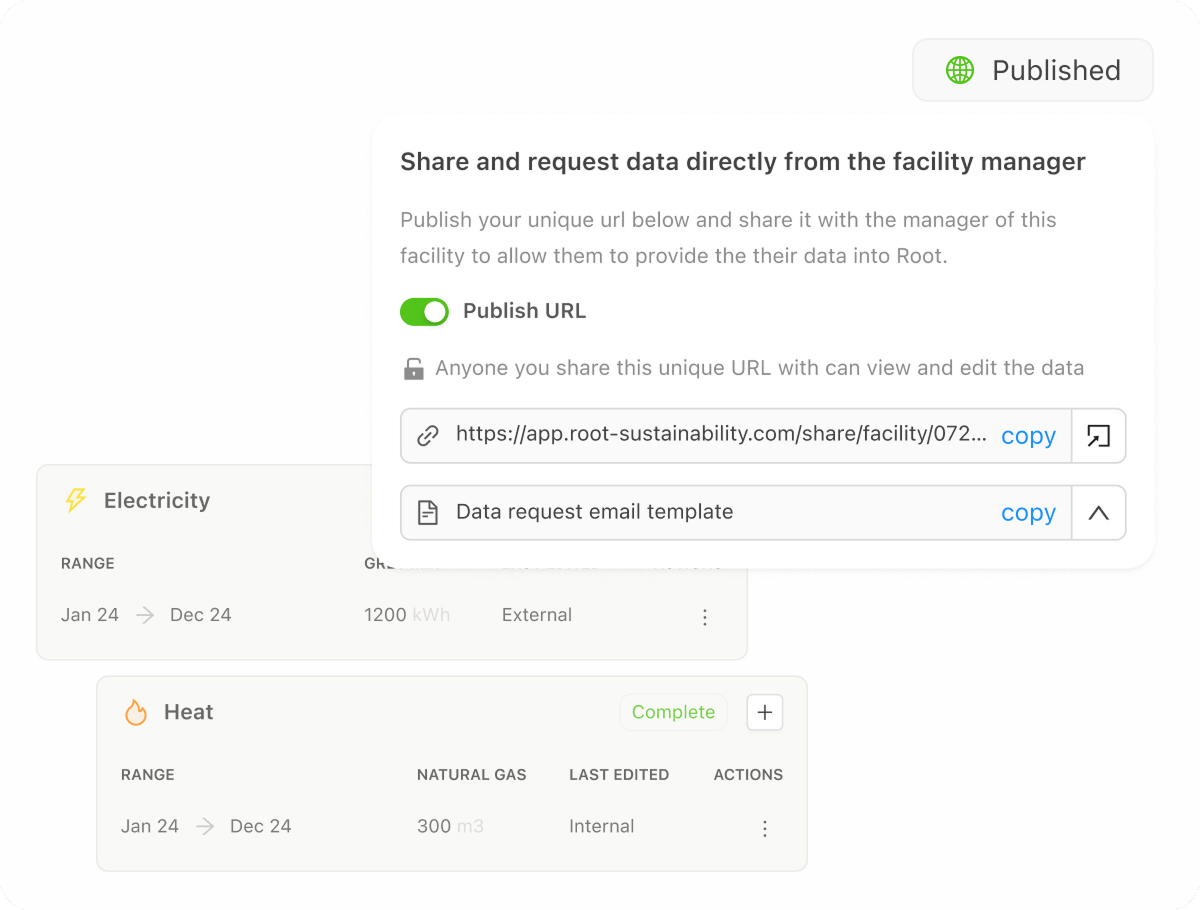
Send data requests directly to suppliers from
inside Root. Suppliers fill in what is needed
without accessing your full dataset. No
spreadsheet attachments, no chasing threads.
inside Root. Suppliers fill in what is needed
without accessing your full dataset. No
spreadsheet attachments, no chasing threads.
For example:
A supplier receives a targeted request for their
electricity usage attributable to your products. They
open a link and fill it in directly. The data appears in Root
automatically, with a clear record of who last updated it.
electricity usage attributable to your products. They
open a link and fill it in directly. The data appears in Root
automatically, with a clear record of who last updated it.
Always know what is
measured and what
is estimated
measured and what
is estimated
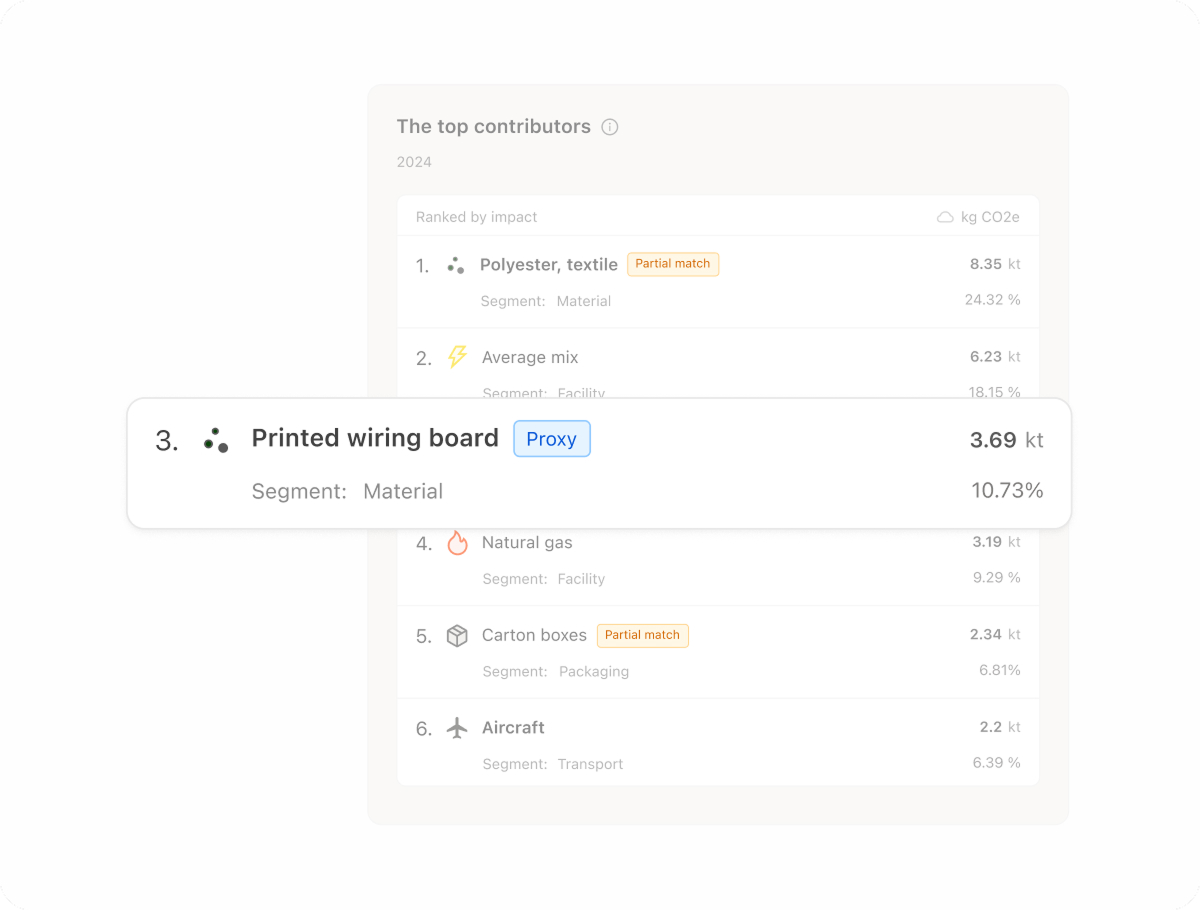
Root shows you exactly what is based on
primary data and what is estimated, with the
source and rationale visible for every input.
Attach certificates or invoices directly to any
input. Every number you report is then backed
by evidence. No estimate enters your dataset
without your approval.
primary data and what is estimated, with the
source and rationale visible for every input.
Attach certificates or invoices directly to any
input. Every number you report is then backed
by evidence. No estimate enters your dataset
without your approval.
For example:
For example: a material matched to a proxy emission
factor is clearly flagged as estimated. You see the
source database and matching rationale right next to it.
factor is clearly flagged as estimated. You see the
source database and matching rationale right next to it.
Root tells you where to
focus first
focus first
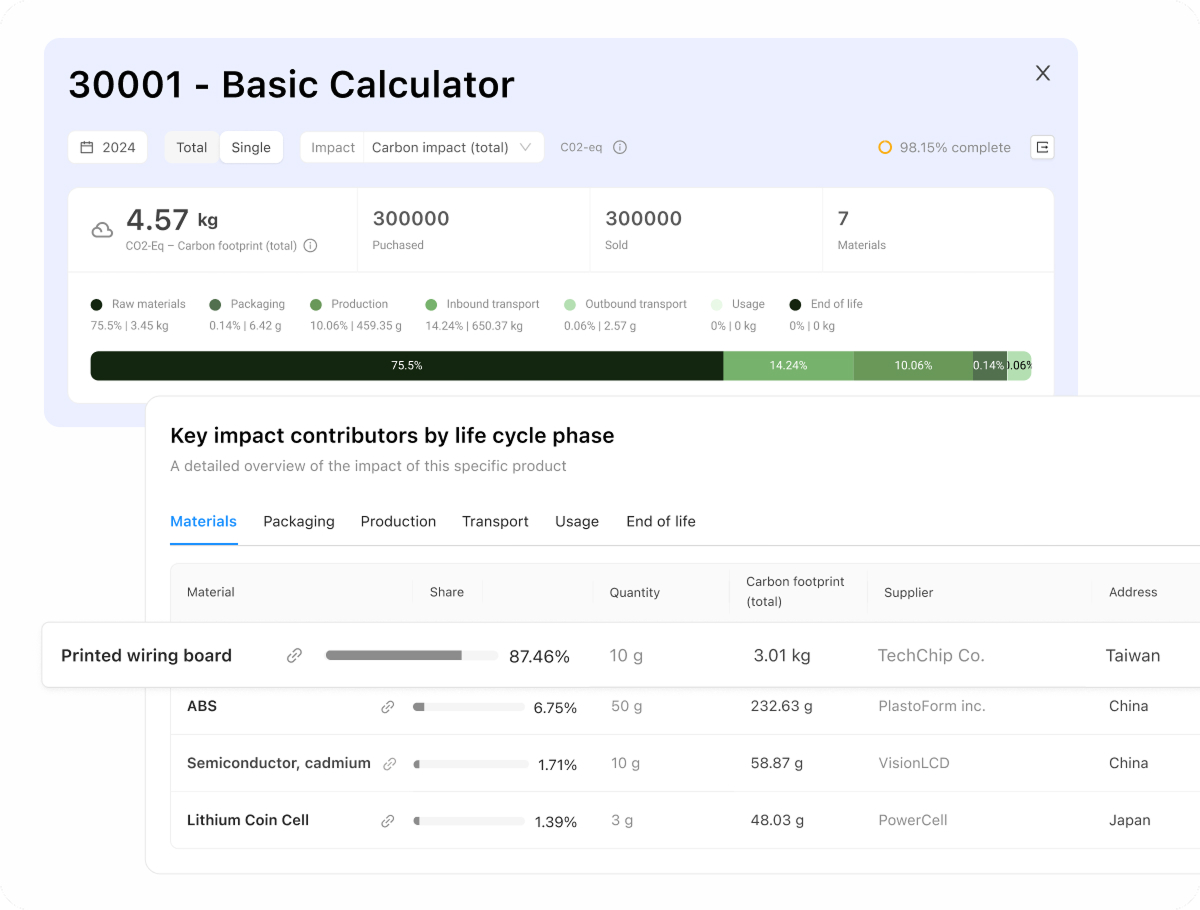
Root shows the key drivers of your footprint.
Your team focuses on the ten percent of inputs
that drive ninety percent of your impact. You
spend less time on data gaps. More time on
what actually moves your numbers.
Your team focuses on the ten percent of inputs
that drive ninety percent of your impact. You
spend less time on data gaps. More time on
what actually moves your numbers.
For example:
For example: your top five materials account for 80
percent of your total product footprint. Root flags these
first so you know exactly where better input data makes
the biggest difference.
percent of your total product footprint. Root flags these
first so you know exactly where better input data makes
the biggest difference.
Test reductions before
you commit to them
you commit to them
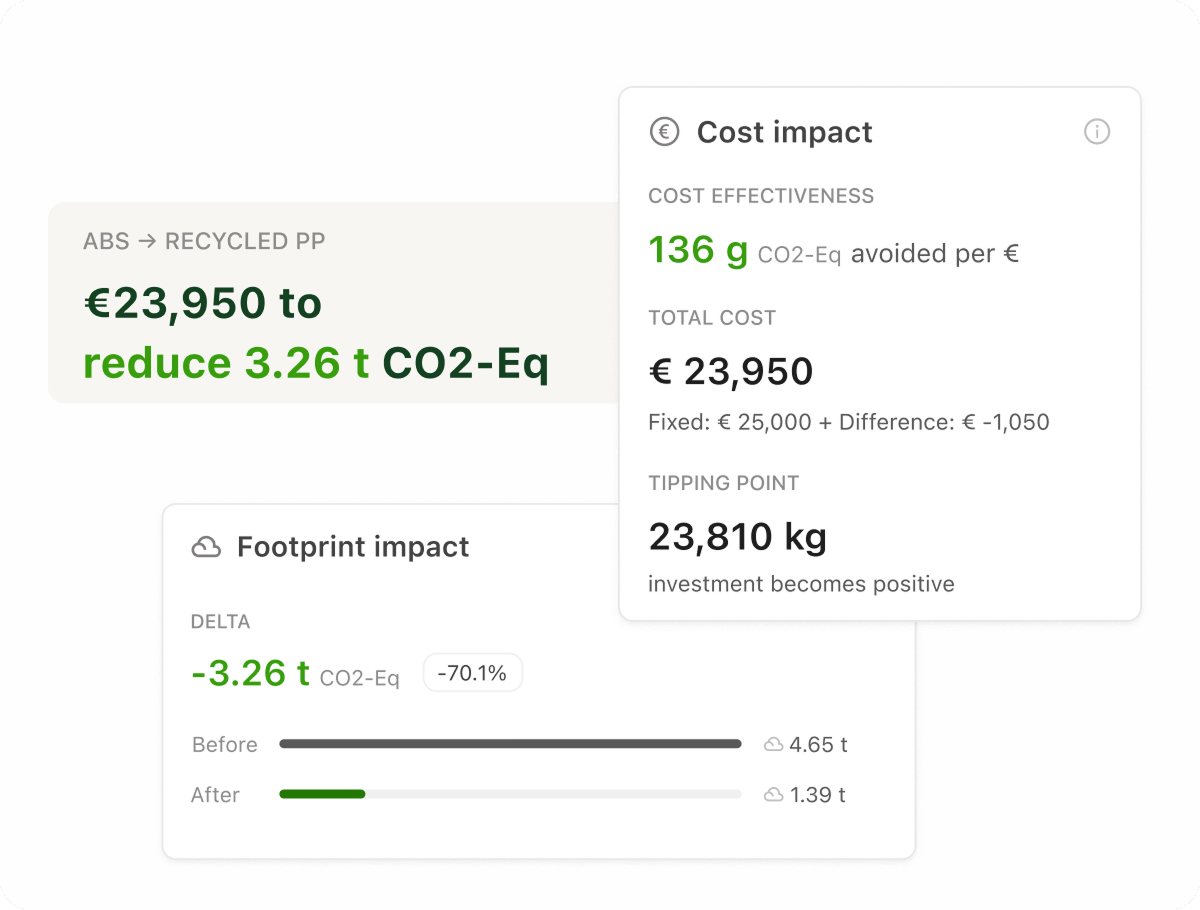
Model changes to materials, energy, or
transport against your live data. See the
impact instantly at product level and company
level. Compare scenarios to find the actions
that deliver the most reduction per euro spent.
transport against your live data. See the
impact instantly at product level and company
level. Compare scenarios to find the actions
that deliver the most reduction per euro spent.
For example:
For example: switching your primary packaging
material reduces your product footprint by 18 percent.
Combining it with a transport change brings that to 24
percent across your full product range.
material reduces your product footprint by 18 percent.
Combining it with a transport change brings that to 24
percent across your full product range.
Case study
601 product footprints
One structured dataset
One structured dataset
Bon Ton Toys needed product-level and company-level
sustainability data at the same time, for B Corp certification, CSRD
reporting, and their WWF partnership.
sustainability data at the same time, for B Corp certification, CSRD
reporting, and their WWF partnership.

Using Root, they generated auditable footprints for
601 products, plus their full company footprint, in
one platform. The same data now powers green
claims, CSRD readiness, and reporting to WWF.
Product-level data also surfaced a concrete
finding: Recycled filling plush toys carry a much
lower environmental impact.
Now they have proof they can share with
customers and partners.
601 products, plus their full company footprint, in
one platform. The same data now powers green
claims, CSRD readiness, and reporting to WWF.
Product-level data also surfaced a concrete
finding: Recycled filling plush toys carry a much
lower environmental impact.
Now they have proof they can share with
customers and partners.
"The clear platform guidance and
traceability made us feel in control."
traceability made us feel in control."


B Corporation
certified
certified

Member of
1% for the Planet
1% for the Planet

WWF
strategic partner
strategic partner

Root now gives us stronger evidence on where the
main impact hotspots are across our catalogue.
Instead of working from assumptions, we have
clearer data-backed direction on where to focus
and where interventions can have the most impact.
main impact hotspots are across our catalogue.
Instead of working from assumptions, we have
clearer data-backed direction on where to focus
and where interventions can have the most impact.


















Get started now
Your data is closer
to ready than you think
For sustainability teams at retailers. Built around
operational data you already have.
operational data you already have.
FAQs
Find quick answers to the most common questions about Root,
our methodology, data requirements, and timelines.
our methodology, data requirements, and timelines.
Do I need perfect data to get started?
No. Root is built for real-world data, which is typically incomplete, inconsistent, and spread across systems. You start with what you have, whether that is purchase orders, a bill of materials, or partial supplier data. Root structures what it can, calculates what is calculable, and flags what is missing. From there, it identifies which gaps have the largest impact on your numbers and actively guides you to fill them in order of priority. Your dataset improves continuously as your data does.
How long until I see results?
Most teams have a working dataset within a few weeks. The timeline depends on your catalogue size and data availability, not on manual calculation work on your side. Larger or more complex catalogues take longer to structure, but each step is guided, so the process does not stall on your end.
How accurate is the output?
Root uses established LCA methodology based on ISO 14040 and ISO 14044 standards. Every data point carries a confidence level, and you can add documentation and notes wherever needed. You always see what is estimated versus what is based on primary data, and exactly why. Accuracy builds as your data builds. You are never left guessing where a number came from.
How does AI actually help?
AI handles specific tasks that would otherwise be manual and error-prone. It flags missing data, guides material matching to verified emission factors by asking targeted questions and proposing the best available match, and identifies anomalies in your dataset. It also focuses your attention: surfacing the roughly 10 per cent of data points that typically drive 90 per cent of your impact, so your team works on what actually moves the needle.
When can I get started?
Immediately. The minimum we need is purchase orders, sales orders, and a bill of materials for the products you want to measure. That BOM can be basic: even a single main material per product is enough to begin. Root can create proxies for similar products and start generating your dataset from day one. You do not need to clean or reformat your data before we begin.
We already use another tool. Is it worth switching?
That depends on one question: does your current tool give you a single dataset that powers every report, footprint, and sustainability claim you need, without rebuilding data for each one? If yes, Root is probably not for you. If you are still exporting data between tools, maintaining separate spreadsheets for different frameworks, or starting from scratch each time a new requirement appears, the switching cost is likely lower than the ongoing cost of your current setup. Most teams who move to Root do so because they have outgrown point solutions, not because Root is newer. We are happy to walk through your current setup in a demo and give you an honest assessment of whether it makes sense to switch.
How much internal work does getting started require?
Less than most teams expect. To get started, you need one person who can export your purchase orders, sales orders, and bills of materials. That is typically a sustainability manager or someone with access to your ERP or product management system. Root structures everything from there. You do not need to involve IT, procurement, or suppliers from day one. Most teams have a working dataset within a few weeks. The timeline dependson catalogue size and how readily available your data is, not on manual calculation work on your end. As your data improves over time, so do your results.